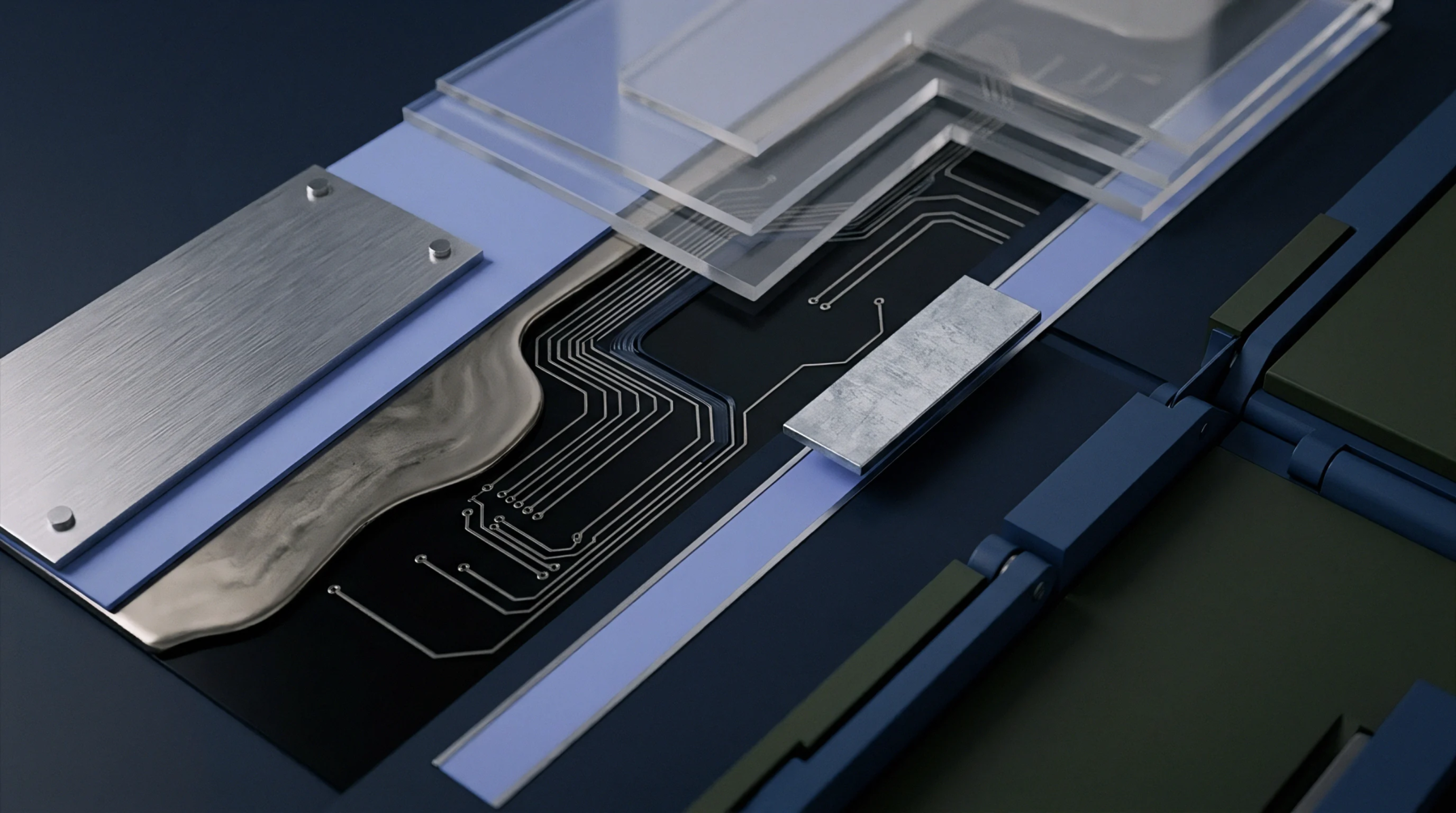
Accelerated Degradation
Electric current applied to a printed circuit assembly inside a heated and moist chamber mimics long term environmental stress. The temperature humidity bias test accelerates ionic mobility to trigger electrochemical migration between conductors that sit at different electrical potentials. This process forces failure modes that normally take years to develop in field operation.
Corrosion Mechanics
Moisture absorption through polymer encapsulants or solder mask layers establishes a conductive path across insulating gaps. Dendritic growth occurs when metallic ions migrate from an anode toward a cathode under an active voltage gradient. Electrochemical reactions sustain this metal transport until a short circuit bridges the separation between traces.
Field failures arise when atmospheric water vapor accumulates beyond the threshold of the protection layers. Accelerated testing uses severe vapor pressure to overcome these internal chemical barriers within hundreds of hours.
Acceptance Criteria
Electrical continuity checks performed after the environmental stress cycle identify bridges or resistive leakage paths that compromised circuit integrity. Consistent application of this test methodology verifies that the resin chemistry and board surface treatments withstand persistent polarization during high humidity exposure. Resistance values that remain stable under these elevated environmental stresses indicate that the assembly design maintains adequate electrical isolation.