
Printed Circuit Board Differential Trace Impedance Test Methods
Differential trace impedance testing verifies high-speed PCB signal integrity using time-domain reflectometry on panel test coupons.
Differential trace impedance testing verifies high-speed PCB signal integrity using time-domain reflectometry on panel test coupons.

TDR discontinuity spikes from undercut are quantified by mapping trapezoidal trace profile ratios to TDR reflection peaks filtered at matched rise times.

Dynamic projection matrix recalibration against physical reference artifacts maintains traceable voxel scale accuracy under factory thermal drift.

High voltage substrate test validity requires accounting for dielectric polarization transients to prevent false breakdown calls and field escapes.
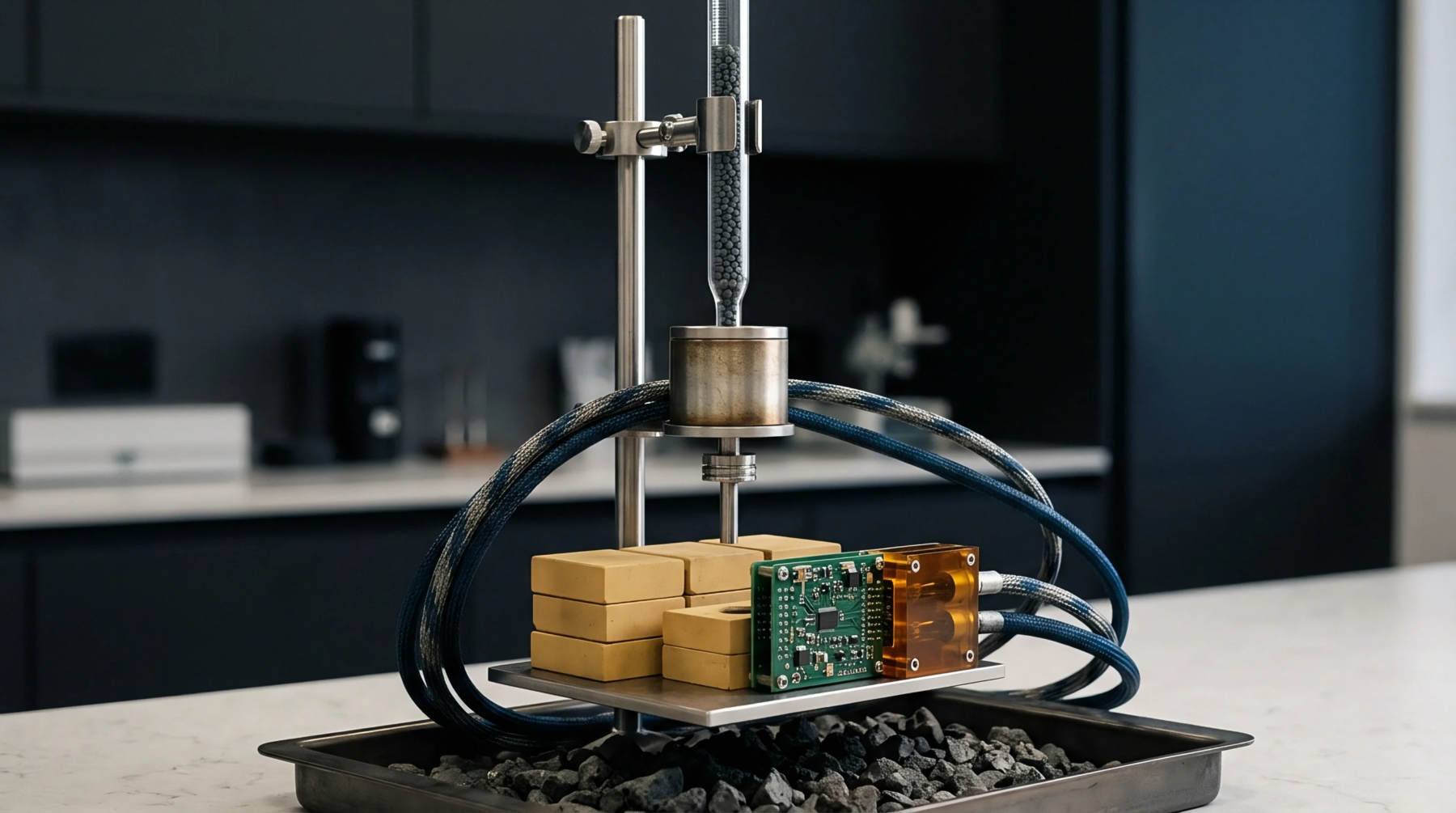
Interlaboratory dissolution recovery variance stems from sample particle sizing, solvent temperature kinetics, and matrix interference, requiring guardbanded acceptance thresholds.

Guard-banded GC-MS testing protects PVC importers by factoring measurement uncertainty into phthalate compliance decisions before customs seizure occurs.

Step height verification on cluster-processed amorphous substrates requires guardbanded metrology and tip-force or dispersion compensation to prevent yield loss.

Surveillance compliance demands continuous cross-tier test record alignment, analytical material validation, and strict engineering change authorization.

Resolving boundary scan escape rates requires weighting fault coverage by defect universe and enforcing active guarding on unprobed parallel nets.

Market surveillance sampling targets high-risk import batches; importers defend compliance through accredited test dossiers and formal uncertainty guard bands.

Integrating hybrid boundary scan and flying probe regimes eliminates unreached structural defects by establishing 99 percent nodal fault coverage.
Expertise is a utility, not a secret. sentiention™ publishes its working knowledge as open reference: intelligence layer covering the materials it sources, the markets it enters, and the reference that serves both.