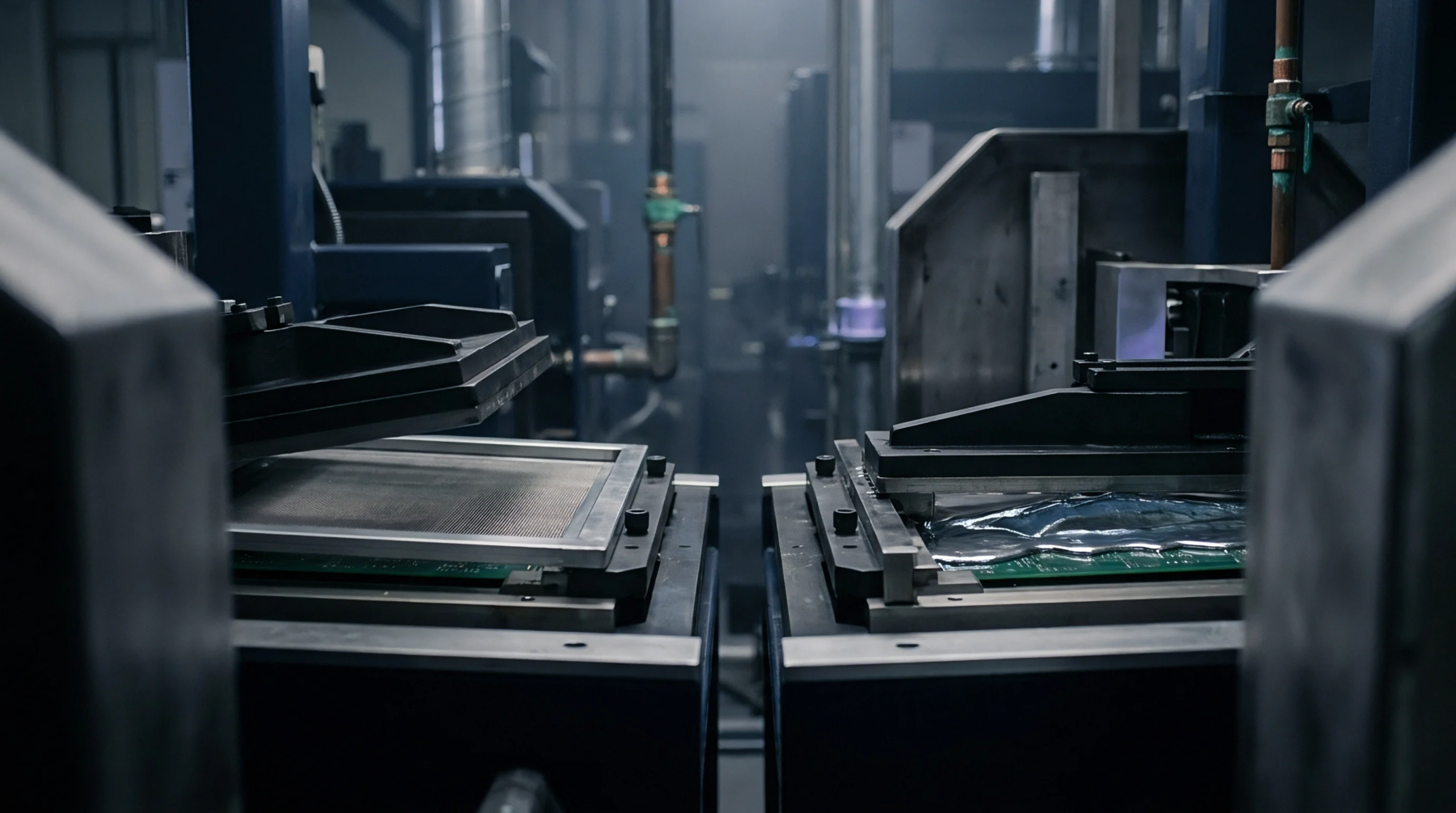
Ultra Smooth Foil Interface Mechanics in Multilayer Board Lamination
Ultra-smooth foil lamination trades mechanical tooth for chemical bonding, demanding tightly controlled press viscosity windows to avoid delamination.
Ultra-smooth foil lamination trades mechanical tooth for chemical bonding, demanding tightly controlled press viscosity windows to avoid delamination.

Foil roughness forces skin currents through sub-micron surface teeth above 10 GHz, requiring Huray snowball modeling and low-etch oxide chemistries.

Quantifying microcrack defect escape rates requires coupling dynamic in situ event detection with accelerated thermal screening to intercept latent joint opens.
Mid-loss laminates balance dissipation factors between 0.005 and 0.010 with moderate panel costs, matching PCIe Gen 4 and 10GbE signal integrity demands.
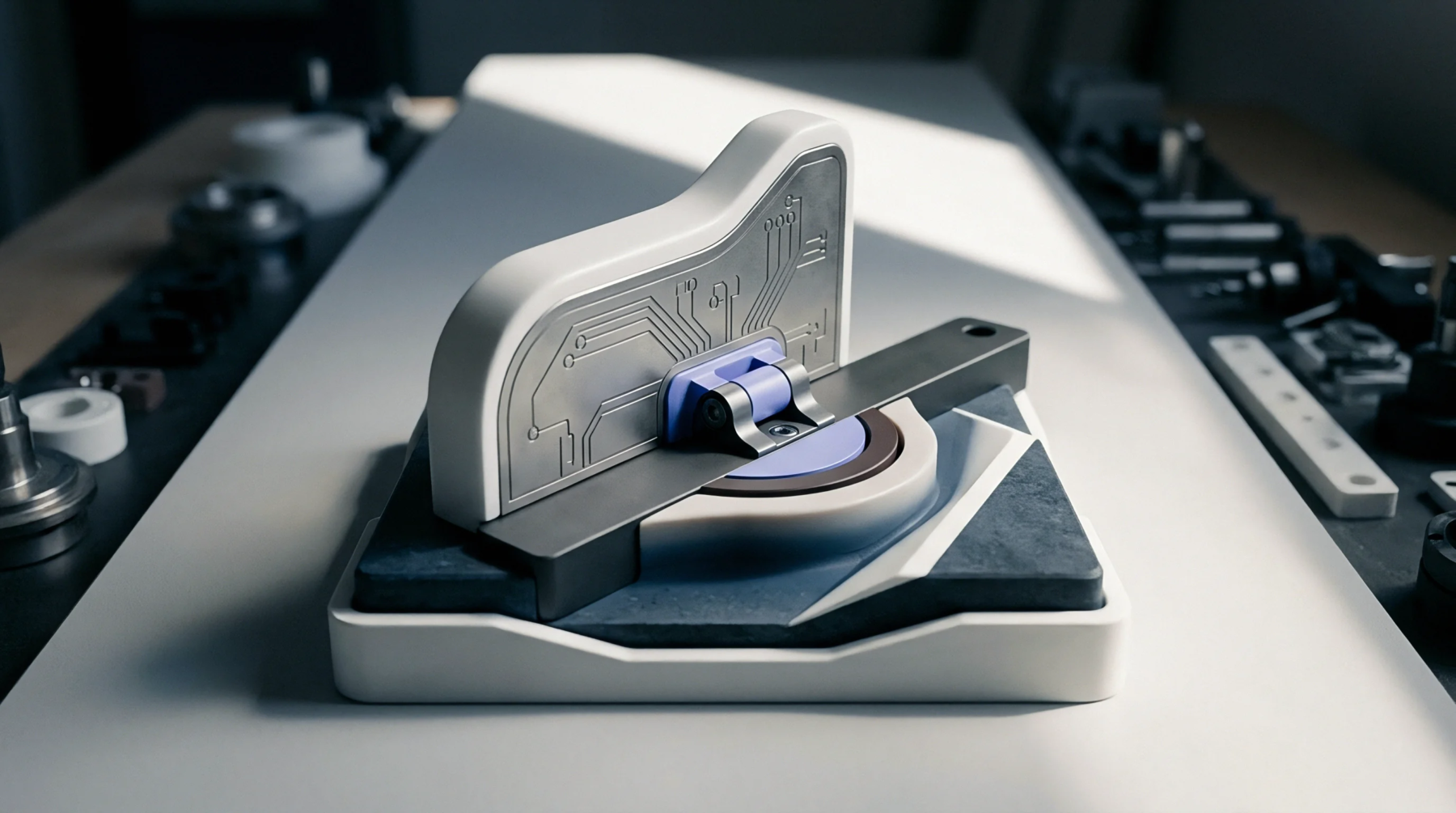
Adhesiveless polyimide substrates eliminate high-loss acrylic adhesives, dropping dielectric loss tangents to 0.002 at 10 GHz when paired with smooth rolled copper.

Trapezoidal etch profiles and sidewall undercut degrade high-frequency channel return loss by introducing spatial impedance steps that demand mSAP or dynamic CAM compensation.

Sub-50 micron trace etching demands mSAP seed layers, anisotropic chemistry passivators, and dynamic laser imaging scaling to hold 3.5+ etch factors and pass IPC Class 3 yield limits.
Expertise is a utility, not a secret. sentiention™ publishes its working knowledge as open reference: intelligence layer covering the materials it sources, the markets it enters, and the reference that serves both.